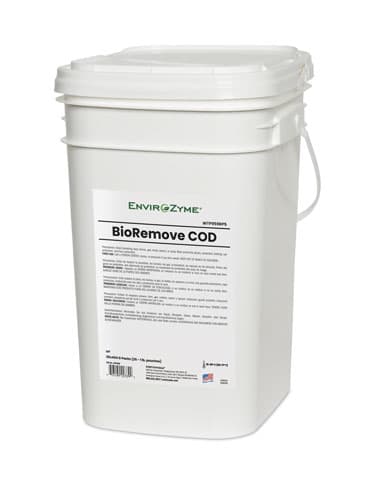
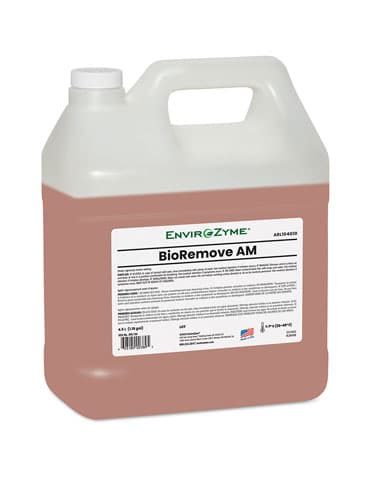
A coking plant treating ammonia distillation wastewater struggled with low ammonia removal efficiency and needed to accelerate the startup of a new secondary treatment system. By implementing a targeted bioaugmentation program using BioRemove COD and BioRemove AM, the facility improved COD removal, rapidly established nitrification, and enhanced overall system stability.
A structured bioaugmentation program was implemented in phases to support system startup and improve treatment performance.
During early-stage operation, BioRemove COD was applied to accelerate the development of active biomass and enhance organic degradation. This phase focused on building sludge concentration, improving floc formation, and stabilizing effluent COD.
Once COD performance stabilized, BioRemove AM was introduced to initiate nitrification. This enabled rapid establishment of nitrifying bacteria and improved ammonia removal efficiency.
Throughout the program, operational adjustments were made to support biological performance, including:
This phased approach allowed the system to transition efficiently from startup conditions to stable, full-scale operation.
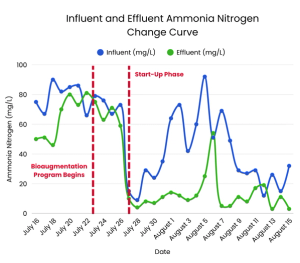
The bioaugmentation program delivered measurable improvements in both organic and ammonia removal performance:
Nitrification was successfully established within just five days of applying BioRemove AM, demonstrating a rapid system response. The system also showed strong resilience to operational challenges, including:
Despite these disturbances, the treatment system consistently returned to normal operating conditions within a short period, indicating improved biological stability and recovery capability. Additionally, biomass quality improved, with increased sludge concentration and enhanced flocculation and settling characteristics.
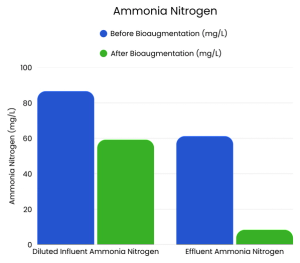
The implementation of BioRemove COD and BioRemove AM enabled the coking plant to achieve faster system startup, improved treatment performance, and greater operational stability. The bioaugmentation program enhanced both COD removal and nitrification while increasing the system’s ability to handle variable and challenging conditions.
Overall results included: