419-386-2813
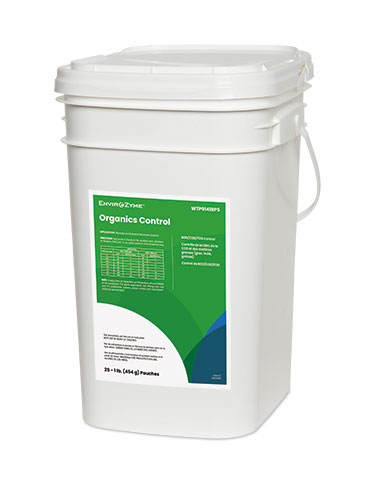

High-performance organics reduction for everyday plant needs
UPC: 603189002959
Form:
Use:
Date of Disclosure: 2024-01-05T11:23:00
Date code
The first two numbers represent the last two digits of the calendar year produced. The last three numbers represent the day of the year the product was packaged. E.G. 19134 would be the 134th day of 2019.
SDS
9141 - Organics Control SDS English

September 9, 2022
In plants that utilize activated sludge, microorganisms produce extracellular polymeric substances (EPS) that play a definite part in sludge flocculation, but what happens when there is too much EPS?

August 23, 2022
Explore EnviroZyme's case study on enhancing wastewater management at a French Fry Factory, demonstrating significant sludge reduction and improved efficiency.

July 9, 2020
A village in the middle of Michigan's agricultural heartland contained 3 wastewater lagoons with elevated volumes of sludge on their floors. They entered into a year-long lagoon remediation program with EnviroZyme to reduce the volume of sludge and defer dredging costs in each of the 3 lagoons using WWT 5B Brown.

April 11, 2023
328.4 million tons of meat are consumed across the globe every year, creating an excess of animal remains. Animal rendering plants process animal remains sourced from slaughterhouses or farms and ranches.

February 23, 2023
Filamentous bacteria grow in long thread-like strands in which cells do not separate from each other after cell division and grow in the form of filaments. Filaments can dominate in wastewater treatment systems, which has both advantages and disadvantages.

January 23, 2023
It is crucial for wastewater treatment plants to have a perfect balance of nutrients, or else it can be harmful and impossible to achieve optimal efficiency.

February 26, 2022
Since the Clean Water Act and formation of the EPA in the 1970s, water resource recovery entities in the U.S. have been legally required to continually improve the quality of their effluent. Spurred by rising population and production, however, wastewater quantity has actually increased over the same timeframe. The combination of these 2 factors has necessitated more efficient removal of pollutants to produce discharge within environmental regulatory limits, including with regard to BOD and COD.

May 10, 2019
Our last blog post examined water pollution as a result of specialization in industry, specifically in the food industry. For many of the same reasons that food production is concentrated into large, specialized factories, people tend to congregate in large cities. When people live closely together, they enjoy benefits such as near proximity to jobs, food, healthcare, and entertainment.